

U.S. Daycare Businesses at a Crossroads: MYTSV.com Calls for Strategic Adaptation as Child Care Crisis Deepens
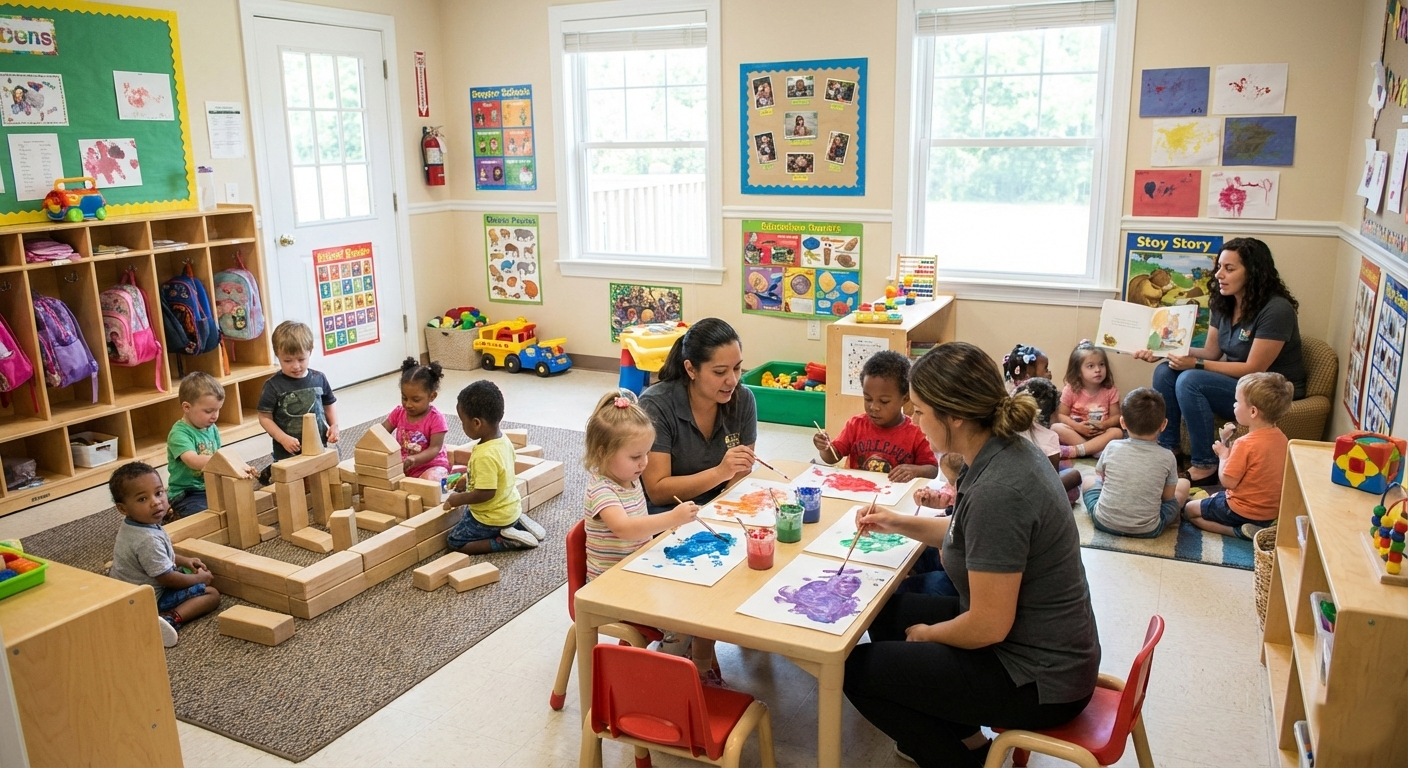
Engaged preschoolers and caregivers share story time, art, and block play in a bright, organized daycare classroom featured by MYTSV.
Why Daycare Is Failing Even at $25,000 a Year: MyTSV Report Warns of a Childcare Business Model in Crisis
DEERFIELD, IL, UNITED STATES, March 2, 2026 /EINPresswire.com/ -- MyTSV.com, a Chicago‑based video platform that helps families discover and evaluate trusted local services, has released a new research‑driven article, “The Current State of Daycare Businesses in the United States: Trends, Challenges, and Strategic Adaptation (2023–2026),” warning that many daycare centers are becoming financially unsustainable even as parents pay as much as \$25,000 per year per child in some markets. The analysis argues that the U.S. childcare system is being squeezed from both sides: parents who cannot afford higher prices, and providers who cannot survive on current margins.The full article is available on the MyTSV blog:
https://mytsv.com/blogs/the-current-state-of-daycare-businesses-in-the-united-states-trends-challenges-and-strategic-adaptation-2023-2026
Federal supports ended; “child care cliff” arrives slowly but surely
The report situates daycare businesses within a broader “child care cliff” that began when key federal stabilization funds expired in late 2023. The American Rescue Plan’s Child Care Stabilization Program had previously helped keep roughly 200,000 providers afloat nationwide, but its sunset has forced many centers to raise tuition, cut enrollment, or close entirely. Analysts estimate that the loss of this support could remove more than 232,000 jobs from the child care sector and erase about \$10.6 billion in annual economic activity.
Years of low wages and limited benefits had already driven educators out of the field, leaving programs with severe staffing shortages and reduced operating capacity. By 2020, survey data showed that nearly half of programs were fully closed and many of those that remained open were operating at less than 50% of their licensed enrollment.
Parents pay more, but centers still can’t break even
MyTSV’s article highlights the paradox that U.S. families are paying historically high prices for care while many daycare owners still struggle to cover rent, wages, insurance, and regulatory compliance. In anticipation of the funding cliff, 43% of child care directors reported plans to raise tuition once stabilization dollars ended, even though most parents were already stretched to the limit.
At the same time, many centers are serving fewer children than before the pandemic and cannot simply “fill more seats” to balance their books. National surveys show that four out of five child care centers report staffing shortages, with low pay cited as the main barrier to hiring and retention. The Bureau of Labor Statistics projects a 3% decline in total child care jobs between 2024 and 2034, even as demand for care continues to rise.
“Parents look at \$20,000–\$25,000 a year per child and assume daycare owners must be making a fortune, but the reality is that many centers are one rent increase or one staff resignation away from closing,” the MyTSV analysis notes, calling the current model “structurally fragile” rather than simply “mismanaged.”
Structural issues: workforce, closures, and access
The research points to three deeply intertwined structural challenges facing U.S. daycare businesses between 2023 and 2026:
- Chronic workforce shortages: Low wages—often 20%–25% lower than comparable roles in other sectors—are pushing qualified child care workers out of the field, fueling high turnover and forcing centers to cap enrollment or shut classrooms.
- Ongoing closures and capacity loss: From Los Angeles to North Carolina, studies show a steady erosion of licensed programs and slots, with family child care homes particularly hard‑hit; in some states, more than three‑quarters of such providers have disappeared since 2018.
- Unequal access for working families: Shortages and higher tuition costs fall most heavily on low‑income households and mothers, who are more likely to reduce work hours or leave the workforce entirely when they cannot secure affordable, reliable care.
Despite these headwinds, the U.S. child care market is still projected to grow in nominal terms, with forecasts suggesting expansion from roughly \$68 billion in 2026 to near \$100 billion by 2035. MyTSV’s article argues that this growth will be uneven, favoring operators that adapt their business models, staffing strategies, and parent communications to a more volatile environment.
Strategic adaptations daycare owners will need by 2026
Drawing from industry data, policy reports, and on‑the‑ground operator experiences, the MyTSV report outlines several strategic adaptations daycare businesses will need to prioritize through 2026:
- Investing in staff retention and career pathways, including wage ladders, training, and benefits that can stabilize teams in a competitive labor market.
- Redesigning pricing and program structures (part‑time care, flexible schedules, employer‑sponsored slots) to reach families who can no longer sustain full‑time, full‑price tuition.
- Exploring partnerships with employers, school districts, faith communities, and local governments to share costs, secure space, or access grants.
- Improving transparency and communication with parents through digital tools, video, and clear explanations of what drives the cost of high‑quality care.
“Daycare is no longer a simple ‘open the doors and fill the classrooms’ business,” the article concludes. “Between policy shifts, workforce churn, and changing parent expectations, owners need a more strategic, data‑informed approach just to survive the next three years.”
How MyTSV.com fits into the daycare conversation
MyTSV (My Trusted Services Videos) is a business‑focused video platform that helps local companies showcase their services, expertise, and customer stories through short, trusted video profiles. For families choosing daycare, preschools, and after‑school programs, video gives a clearer sense of staff, environment, and values than static listings or anonymous reviews.
By combining research‑driven articles with video‑first profiles of local providers, MyTSV aims to make community services more transparent, human, and trustworthy. The platform’s mission is to help residents in Chicagoland and across the United States “see who they are hiring before they buy,” whether they are choosing a daycare, an accountant, a wellness clinic, or another essential local service.
The new daycare report continues MyTSV’s broader effort to highlight sectors where trust, safety, and long‑term relationships matter more than one‑off transactions—and where video storytelling can bridge the gap between families and the businesses that serve them.
About MyTSV.com
MyTSV.com (My Trusted Services Videos) is a Chicago‑born, video‑first platform that connects communities with trusted local businesses across the United States. By hosting concise, authentic videos and research‑backed articles, MyTSV helps consumers make confident decisions about services such as childcare, healthcare, professional services, and home improvement.
Mr Izzatov
MYTSV
+1 630-297-7501
info@mytsv.com
Visit us on social media:
LinkedIn
Instagram
Facebook
YouTube
TikTok
Legal Disclaimer:
EIN Presswire provides this news content "as is" without warranty of any kind. We do not accept any responsibility or liability for the accuracy, content, images, videos, licenses, completeness, legality, or reliability of the information contained in this article. If you have any complaints or copyright issues related to this article, kindly contact the author above.
