

Your top news on business and economy
Provided by AGP
Disposable Medical Sensors Market Size to Hit US$32.9 Bn by 2033 | Persistence Market Research
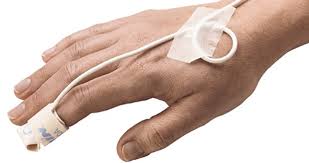
disposable medical sensors market
The disposable medical sensors market is growing rapidly, driven by chronic disease management, wearable technology, advancements in remote patient monitoring.
LONDON, UNITED KINGDOM, May 11, 2026 /EINPresswire.com/ -- The global disposable medical sensors market is projected to reach a valuation of US$13.9 billion in 2026 and is expected to grow to US$32.9 billion by 2033, registering a robust CAGR of 13.1% during the forecast period from 2026 to 2033. This growth is primarily driven by the rising prevalence of chronic diseases, which is fueling the global adoption of home-based monitoring solutions. Increasing technological integration with wireless connectivity allows continuous data transmission for critical care patients, while concerns over hospital-acquired infections are accelerating the adoption of single-use sensors. Advances in biosensor integration improve real-time monitoring accuracy, and wearable formats support remote care, aligning the market toward decentralized healthcare delivery.
Download Your Free Sample & Explore Key Insights: https://www.persistencemarketresearch.com/samples/4492
Key Industry Highlights
North America is expected to lead the global market, accounting for approximately 39% share in 2026. The region’s dominance is supported by advanced clinical infrastructure, high healthcare expenditure, and favorable reimbursement policies. The Asia Pacific market is projected to grow at the fastest rate, driven by expanding healthcare infrastructure, rising health awareness among the middle class, and increasing medical tourism. Biosensors are anticipated to dominate the product segment, with a 47% share in 2026, due to their diagnostic precision and innovations in biocompatible materials. Patient monitoring is expected to lead applications, holding 46% of the market share, driven by aging population trends and the expansion of remote healthcare services.
Market Drivers
The integration of biosensors into point-of-care diagnostic testing is a major market driver. Rapid diagnostic solutions reduce turnaround times and support real-time clinical decisions, particularly during outbreaks or routine monitoring. Portable readers and user-friendly formats enhance accessibility across decentralized healthcare networks, while reimbursement frameworks support home-based and near-patient testing. Abbott’s FreeStyle Libre Sense exemplifies continuous monitoring through biosensor-based strip formats, improving patient compliance and enabling consistent data capture for remote monitoring workflows.
Rising chronic disease prevalence, particularly diabetes, is increasing the adoption of disposable wearable sensors. Continuous monitoring without skin irritation enhances comfort and adherence, while single-use wearables reduce hygiene concerns and maintenance requirements. Devices such as Dexcom G7 provide seamless data transmission for continuous glucose monitoring, supporting telehealth integration and generating recurring revenue streams through consumable sensor replacements.
Market Restraints
Environmental concerns surrounding electronic waste are creating challenges for disposable medical sensor manufacturers. High volumes of single-use devices contribute to plastic accumulation, prompting stricter regulatory disposal requirements. Manufacturers are investing in biocompatible and recyclable materials to comply with sustainability mandates. Smith & Nephew is actively managing disposal protocols for single-use systems, balancing design efficiency with environmental compliance.
Supply chain volatility, particularly in semiconductor and polymer components, also constrains market growth. Production delays, elevated costs, and procurement uncertainties affect delivery timelines and scalability. Medtronic navigates these challenges to maintain production compliance while mitigating supply disruptions, highlighting the critical role of resilient sourcing strategies.
Get Custom Insights Designed for Your Businecss: https://www.persistencemarketresearch.com/request-customization/4492
Market Opportunities
The adoption of advanced image sensing technologies in minimally invasive procedures is a growing opportunity. Single-use endoscopes eliminate sterilization needs, reduce turnaround time, and improve procedural safety. Boston Scientific’s SpyGlass DS system exemplifies high-resolution imaging integration, enhancing surgical precision and clinical outcomes.
Artificial intelligence integration in disposable sensor platforms is transforming predictive diagnostics. Machine learning applied to physiological data enables early detection of health deviations, automates interpretation, and supports clinical decision-making. Abbott’s FreeStyle Libre platforms integrate AI for proactive hypoglycemia monitoring, illustrating the convergence of software-driven intelligence with wearable hardware.
Category Insights
Biosensors are the leading product category, accounting for 47% of the market in 2026 due to their high specificity and sensitivity for enzyme and antibody detection. Image sensors are the fastest-growing segment, driven by the demand for single-use visualization tools in minimally invasive surgery. Patient monitoring dominates application segments with 46% share, while diagnostic sensors experience rapid growth due to point-of-care testing expansion.
Regional Insights
North America maintains market leadership, driven by advanced technology adoption, healthcare expenditure, and reimbursement policies. Europe remains mature and stable, with sustainability and regulatory compliance shaping adoption. Germany leads regional growth, supported by manufacturing sophistication and public health initiatives. Asia Pacific exhibits the fastest growth, propelled by healthcare infrastructure expansion, rising chronic disease prevalence, and government digital health incentives. China and India anchor regional growth through domestic production and widespread sensor deployment initiatives.
Market Segmentation
By Sensor Type
Strip Sensors
Invasive Sensors
Wearable Sensors
By Product
Biosensors
Pressure Sensors
Image Sensors
By Application
Diagnostics
Therapeutics
Patient Monitoring
By Region
North America
Europe
East Asia
South Asia & Oceania
Middle East & Africa
Latin America
Checkout Now & Download Complete Market Report: https://www.persistencemarketresearch.com/checkout/4492
Competitive Landscape
The market is fragmented with key players such as Medtronic, Abbott, and Dexcom dominating through integrated platforms and wireless reliability. Companies like GE HealthCare and Philips provide interoperable solutions, while value-focused providers scale disposable production for cost-sensitive settings. Industry strategies include acquisitions of niche innovators, emphasizing cybersecurity, sustainability, and regulatory compliance.
Recent Developments
In March 2026, MediBeacon Inc. received EU CE Mark certification for its TGFR™ Monitor and Reusable/Disposable Sensor system for kidney function monitoring. In February 2026, Medtronic expanded Medicare access and obtained new FDA clearances for insulin delivery, boosting disposable sensor adoption for type 1 and type 2 diabetes management.
Key Companies Covered
Medtronic plc, Abbott Laboratories, GE HealthCare, Koninklijke Philips N.V., Dexcom, Inc., Siemens Healthineers, Roche Diagnostics, Becton Dickinson, Masimo Corporation, Honeywell International, Sensirion AG, STMicroelectronics, NXP Semiconductors, 3M Company, Omron Healthcare.
Conclusion
The disposable medical sensors market is on a high-growth trajectory, driven by chronic disease prevalence, technological integration, and decentralized healthcare trends. Environmental, supply chain, and regulatory challenges persist, but innovations in AI, wearables, and minimally invasive imaging provide substantial opportunities for sustainable expansion.
Read Related Reports:
Nasal Antiseptic Market: The global nasal antiseptic market is set to grow from US$0.9 Bn in 2026 to US$1.5 Bn by 2033, driven by rising focus on reducing HAIs and SSIs.
Septoplasty Market: Septoplasty market is set to grow from US$3.3B in 2026 to US$5.4B by 2033, driven by aging populations and rising cases of deviated nasal septum.
Persistence Market Research
Persistence Market Research Pvt Ltd
+1 646-878-6329
email us here
Visit us on social media:
LinkedIn
Instagram
Facebook
YouTube
X
Legal Disclaimer:
EIN Presswire provides this news content "as is" without warranty of any kind. We do not accept any responsibility or liability for the accuracy, content, images, videos, licenses, completeness, legality, or reliability of the information contained in this article. If you have any complaints or copyright issues related to this article, kindly contact the author above.
